How Pet Food Is Made: From Raw Ingredients to the Finished Product
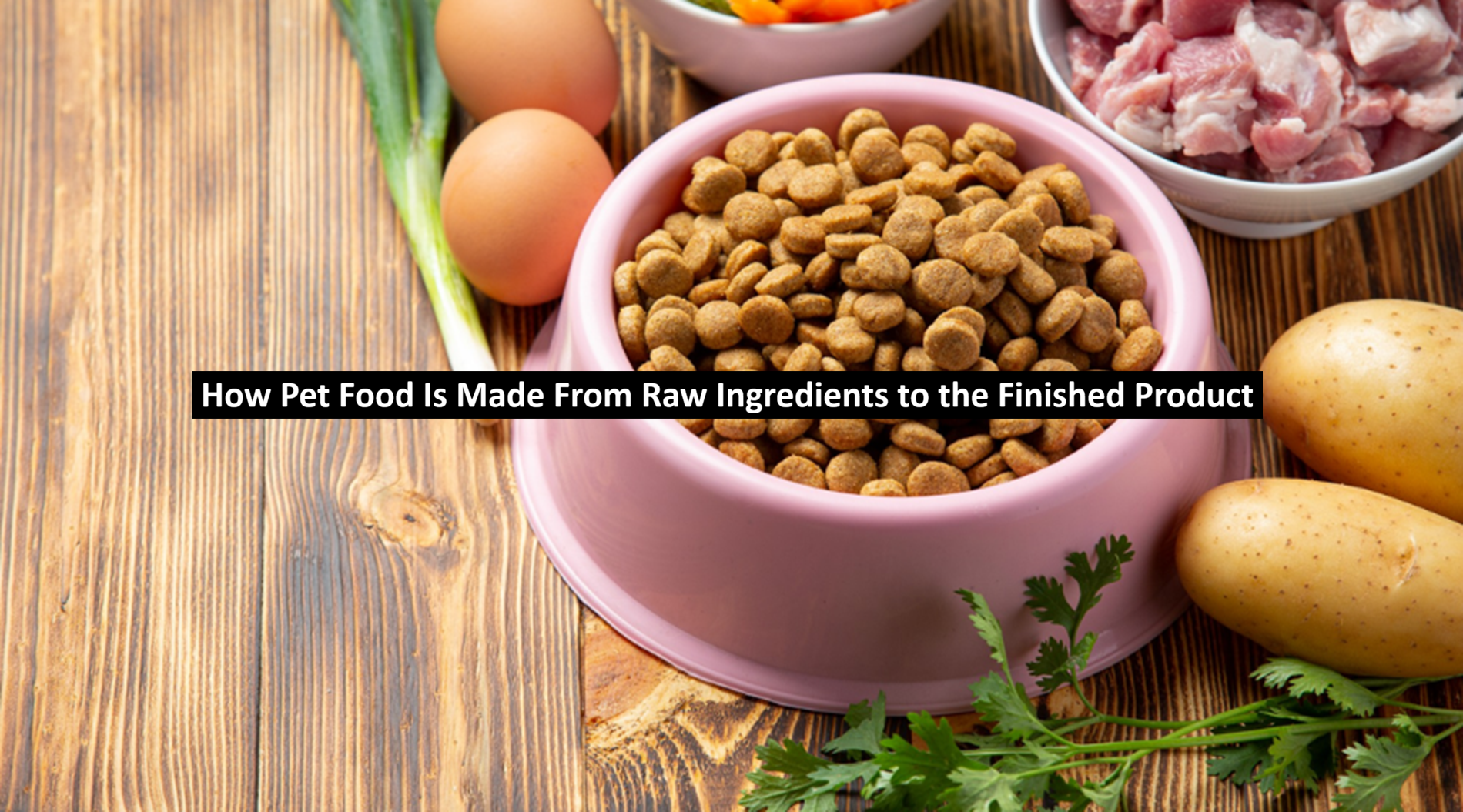
A bag of kibble or a tin of wet food may seem straightforward, but the process of making it is much more involved than one might think. Everything from ingredients, nutritional content, processing, quality control, and even packaging goes into creating a final product that is fit for sale.
The modern Pet Food Market was created in response to the growing interest in pet nutrition, high-quality ingredients, and animal well-being. The industry research conducted by Expert Market Research also shows that changes in consumer preferences and product development trends drive the market. The manufacturers offer a wide range of products for pets of different species, ages, sizes, and nutritional needs. However, the production process remains the same and is designed to create products with appropriate nutritional content, food safety, and a high-quality result.
It begins with nutritional formulation.
As part of the development stage, before production, recipes are created by a team of nutritionists and food scientists considering what is needed for a specific animal’s diet based on nutritional values. This can take into account species (cats vs dogs), life stages (puppies, kittens, adults, older animals), to create a formulation in the right proportions. It can consist of elements such as protein, fat, carbohydrates, fibre, vitamins, minerals, and others.
In addition, the recipe has to be appropriate to the manufacturing process. Different ingredients respond differently to the application of heat, pressure, water, and drying. Consequently, the formulation has to be developed considering both nutritional and technological criteria.
Also, the moisture content, texture, keeping quality, and physical appearance during the production process are taken into account.
Read: How to Create a Safe and Pet-Friendly Home Environment
Selecting and checking raw ingredients
When the formulation is established, the required ingredients are sourced and delivered to the manufacturing facility.
These ingredients vary depending on the type of product and can include meat or animal products, grains, plant proteins, oils, fats, fibres, vitamins and minerals. Ingredients can arrive in a dry form or may need to be kept in refrigerated or frozen storage.
Raw materials are generally tested against specifications before being used in the manufacturing process. These tests can include identification, moisture content, composition, and possible contamination.
Food safety is a major concern for animal food manufacturers. Animal food can be exposed to biological, chemical, and physical hazards throughout the manufacturing process; therefore, manufacturers need to have appropriate controls in place for the ingredients that are received and the storage conditions for those materials.
Good traceability is also important as records linking ingredients to specific manufacturing batches can assist manufacturers in recalling affected products if a manufacturing problem is identified later.
Preparing ingredients for the production line
Most of the dry ingredients pass through a preparatory process before the mixing stage.
Grinding is the most frequent method and uses machinery to break up solid particles of material to the appropriate size. Consistency in the particle size is important for the uniformity of the blend and affects behavior when baked and extruded.
The required amount of each ingredient is then weighed out in accordance with the formulation. Great care must be taken at this stage since small quantities of certain nutrients, e.g., vitamins and minerals, have a significant effect.
The weighed ingredients are finally transferred to industrial mixers.
Creating a consistent mixture
Mixing – Combine everything all together. Getting to this point is designed to achieve a consistent mixture with all of the individual ingredients evenly distributed. Particle Size, Density, ingredient addition sequence, and mixing times can all have an impact on mixture distribution.
While this phase might seem simple, the impact on consistency can grow with the increase of product output.
When the mixture is well balanced, then each section of the final product can expect a similar nutritional make-up. Next, the course of manufacture goes along several paths depending on what you are making.
How dry kibble is made
Extrusion is a popular technique to manufacture dry pet food.
The thoroughly mixed recipe is delivered into an extruder. As pressure and processing technology combine moisture and high temperatures inside the extruder. During conditioning, water or steam may be added to provide moisture and start to cook the ingredients.
The mixture is pushed and packed as it passes through two rotating screws that force food products through a shaped opening, called a die.
After the mixture is forced into the die, it expands when it reaches normal pressure. It is then cut into pieces, called kibble. Size, shape, and density can be selected depending on the type of die used and process settings. The extrusion process can form part of the food safety process by lowering microorganisms through heating, while good operating practices are important throughout processing and ingredient purchasing, handling, processing, and finished product.
Why drying and cooling are essential
Freshly produced kibble holds too much moisture to enable effective long-term storage. Therefore, the individual pieces go through a drying process. Temperature is controlled in order to evaporate off the water and help create suitable texture and shelf-life.
There must be enough moisture for some types of deterioration to occur (i.e., biological or chemical reactions), so while it has to be dried, it is only removed until the appropriate amount remains and over-drying must be avoided.
After drying, the kibble is cooled to ensure it will not create condensation problems within its packaging; before packaging, it may be coated with a mix of fats, oil and permitted food additives (this will vary between manufacturers and specific recipes).
How wet food takes shape
Making wet food: The making of wet pet food involves a completely different process. Raw materials may be milled, mixed and incorporated with water, fats and other factors. The blended mix can then be formed into chunks, patties, loaf-type or varied forms of pet food.
With the creation of much of the food in cans, thermal treatment is usually used.
After the container of the product has been topped and securely sealed, the food is cooked at a controlled temperature. To prepare the product in such a way to render it commercially shelf stable. Due to its higher levels of moisture, it makes the requirements for packaging and process different. The container it is stored in needs to hold strong during the cooking, distribution, and storage process.
The time and temperature involved differ depending upon the formulation, capacity of the packaging, and equipment used.
Not every pet food uses the same process.
A wide range of products is available in the market; therefore, a wide range of manufacturing techniques are used.
For example, different types of biscuits can be manufactured by baking, extruding, and drying processes. Forfreeze-dried pet foods, different dehyration process is applied. The water is separated from it at low temperature and vacuum conditions.
Similarly, there is a specific requirement for preservation as well as for management of water content of pet foods in case ofsemi-moist pet food.
The appropriate method is chosen based on the following: ingredients of the final product, texture and desired moisture content, shelf-life and nutritional profile.
Keeping nutrients in balance
Nutritional properties may be altered during processing.
Processing (such as heat) can provide benefits such as cooking and controlling the microbial state; however, other nutrients such as some vitamins can not cope well with some processing conditions, and thus considerations are taken at formulating time about potential alteration to nutrition as ingredients undergo manufacture.
Thus, formulation is not just in ingredient selection, but at both ingredient selection and then the formulation of the final processed material. By proper selection of formulations, controls on processing and quality controls on output, manufacturers can produce products to desired nutritional specifications.
What happens during quality control?
Quality checks occur at all stages of production, not just at the end of the production process.
Depending on the products and the manufacturers, various aspects of the production process can be monitored, including incoming material, moisture, temperature, pressure, particle size, nutritional content, microorganisms, and packaging.
A food-safety program can help identify and control a range of potential hazards.
They include receiving and handling agricultural products, manufacturing processes, storage, and transportation. Additionally, batch records and traceability systems support the tracking of products through various stages of production.on
How technology is changing production
Manufacturing technology has become an integral part of modern pet food production.
The use of automated weighing equipment can improve the accuracy of ingredient measurement, whereas sensors can monitor changes in temperature, moisture, or pressure. Besides, computerized control systems can help operators to know what adjustments are needed before an entire batch of pet food is affected.
Moreover, laboratory tests are necessary because they can analyze the properties of ingredients as well as the final product.
These developments are intrinsically linked to the wider industry trends. Organisations like Expert Market Research and Informes De Expertos research the industry trends, shifting product categories, consumer preferences, and other developments in the wider industry. This information is useful in providing context to how the industry is likely to develop, with technical tests and nutritional sciences pointing to how new ingredients and production methods can be applied in practice.
Technology, however, cannot be a substitute for human input. Trained personnel need to read the equipment, examine the results, follow the appropriate safety procedures, and be able to react to any anomalies.
Packaging completes the process.
Following production and quality control, the food needs appropriate packaging. Dry food packaging is used to prevent moisture, air, and unwanted contamination from entering the packaging. For wet food, containers and seals must be designed to preserve product integrity throughout the cooking and storage processes.
The packaging can also be used to present essential information to the consumer, such as the identity and quantity of the food, ingredients, and other mandatory information.
In case of the food becoming subject to product recall, the production date (batch/lot number) recorded on the packaging will facilitate traceability. Therefore, effective packaging has two main functions: to preserve the food and to provide information on the food.
What could change in the future?
The manufacture of pet food will probably become more data-driven and efficient with regard to resource usage. Manufacturers are considering what they can do to increase the efficiency of the use of energy, water, and, of course, minimize packaging. Emerging and alternative proteins and other newer ingredients are also under discussion.
These bring their own questions to the table too, including nutritional qualities, safety, digestibility, shelf-life availability, legal implications of use and physical characteristics.
More sophisticated sensor technology will also help manufacturers monitor processes accurately.
From raw materials to the finished product
The process from raw ingredient to finished pet food is a closely related sequence of steps.
Starting with nutritional formulation, the ingredients are selected, inspected, and a recipe developed. The ingredients then undergo preparation, weighing, and blending before undergoing formulation, based on the product, extrusion, drying, thermal processing (cooking/baking), or freeze-drying.
Quality assurance and control continue throughout the process, with all necessary packaging steps followed to ensure stability during storage and distribution of the final product.
What goes into a pet’s food bowl is therefore more than just the ingredients and the method for producing a consistent, safe, and stable finished food product through a combination of science, manufacturing control, supply chain management, and quality assurance.
Author’s Bio:
Roshan Kumar is a writer and researcher covering food, nutrition, consumer behaviour, and developments across the food industry. His work explores topics such as pet nutrition, food production, changing consumer preferences, and the Pet Food Market.