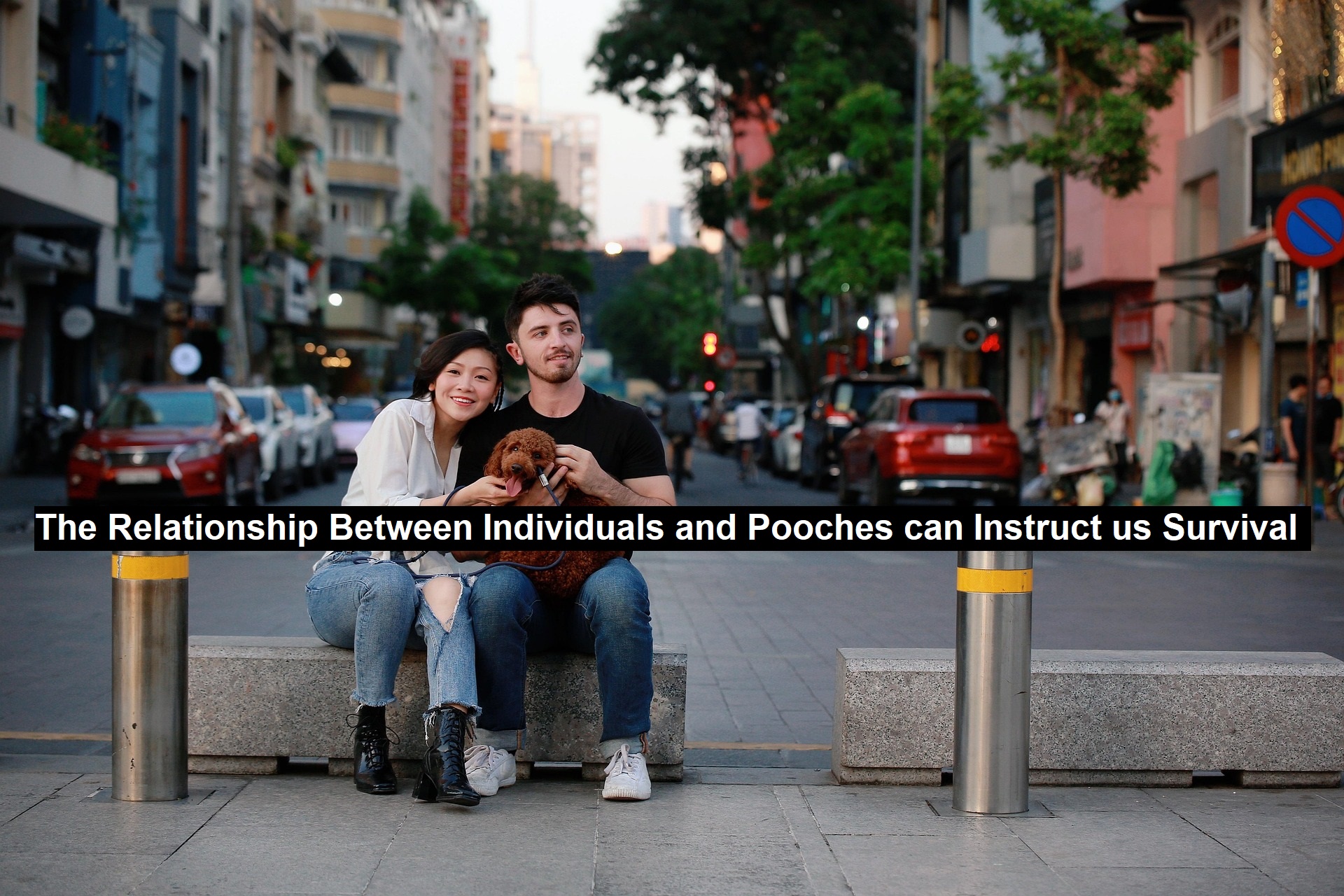
The Relationship Between Individuals and Pooches can Instruct us Survival
As Europe resumes the ill-gotten thought of slaughtering wolves, Indeera Menon of WWF-India says ‘This is what happens when you disregard the convention of co-existence’. I am right now perusing Keggie Carew’s Brutal. This starts by telling a story around the relationship between individuals and dogs.
Carew reminds us that the canine animal we most cherish is plummeted from one we have tirelessly abused. Our best companion and most noticeably awful enemy.’
Are our pioneers as well disengaged from nature?
I fear that European pioneers who extenuate slaughtering wolves live in a society as well changed. They have long overlooked the significance of these connections.
I commented to my girl who as of late returned from a trip to London. For the to begin with time she experienced highly-strung individuals living at thickness. ‘It’s barely any surprise’ I said ‘that we have worldwide conflict’. Including ‘when most individuals making choices live in places like Unused York and London, where they don’t involvement a every day life of peace and co-existence.’
Recently I voyage on an expanded trip to Fiji and went through time in a inaccessible town who have their claim tribal pioneers. Each time I do this it fortifies my conclusion almost our genuine relationship with the characteristic world. Carew’s composing reminded me of my encounters with the nearby town mutts, which astounded me.
Pacific mutts run wild
Unlike in western nations, Pacific town pooches ‘run wild’ … given their possess scope to be mutts whereas living among villagers. They are acknowledged and (in the conventional towns) looked after very well. The most unusual thing in spite of the fact that. In the week we remained in a farther town we never saw one canine poo. Still haven’t figured out how that worked!
That’s not to say that mutts who are a danger are endured. The same can be said of individuals in spite of the fact that. This regardless, the level of social cover and participation between pooches and individuals is remarkable.
When you visit their put among the islands the mutts welcome you as any human would. Or undoubtedly, as an creature might, reviewing my experience with a wild stingray a couple of a long time back.
From there on, the pooches go with you as companions. As we cleared out our town homestay in Qamea the nearby female blushing strolled us to the vessel, swaying her tail at us whereas bringing down her ears and growling at the other pooches. She walked ahead deliberately and made it her work to clear a secure way for us in the dark.
My accomplice talked of strolling an hour over another island in Fiji to snorkel. The town mutts would walk ahead, at that point hold up persistently for two hours on the shoreline, some time recently strolling her back domestic. My child had the correct same thing happen on Vanuatu this year.
Denaturing mutts and our association to everything
On the inaccessible Pacific Islands pooches are given chance to be pooches. Their welfare appears to be more careful in the places that hold social sensitivities. This breaks down in the cities where those values begin to deteriorate similarly, for both pooches and people.
Given chance, mutts rapidly drop into a schedule and live nearby individuals, who acknowledge them into their possess society. On both sides its establish … a choice we each make. Residential mutts in western society, on the other hand, are prepared, caged and their normal soul is broken. The more visceral instinctual may as it were reemerge when an proprietor is undermined and an creature bounced to their defence.
For the most portion, westernized mutts are constrained into a culture that is evacuated from the common world. In this sense they have ended up as detached from nature as we are. And subsequently, we’ve moreover come to treat pooches – indeed wild ones – as partitioned from nature. If we didn’t, European advocates of wolf butcher might figure it out how critical wolves are for humanity’s future.
Instead of living ‘with’ mutts (or wolves) we have created ourselves a part of ace and commander. It’s not since we fear being assaulted, it’s since we fear losing control. We can no longer envision a world of living among them. This might alter things for us, so we criminalize their animality in the most brutal way conceivable. We unpredictably* take their lives absent. Indeed if they are posturing no chance to us, or might indeed be revamping advantageous ecosystems.
*Culling is unpredictable since we have no thought how this ‘management’ influences the characteristic adjust of things. We can effectively be making things more regrettable, as our choices out outwith any characteristic system.
Sacrificing our freedoms
The way we treat creatures is comparative to the way we fear nonnatives directing world approach. Such as the Pacific Island countries attempting to hold European-Australians to account, for climate alter and ocean level rise. Fair as of late, the Australian government struck a bargain with those countries. We will clearly bear them a modern nation to settle in, fair so long as they allow us more control over their political undertakings. Lawmakers call this ‘mobility with dignity’.
The flexibility those villagers in Fiji (and their pooches) have to live their conventional lives is something western powers cannot get it or tolerate. For them it is commensurate to giving into something questionable. It’s giving up control and pandering to vulnerability and a strategy of run the show that is unfamiliar.
But building common believe generates certainty. The results are useful. Something else, a diligent story around our struggle with nature (for what else is this, other than our relationship to all creatures and each other) is off-base. Indeed well known natural life documentaries are strewn with cases of threatening vibe between creatures when the reality is more tranquil and cooperative.
I examined a complaint some place (maybe as a letter to BBC Natural life) that Common History movies grant a unbalanced sum of time to chasing groupings relative to that which predators really spend chasing and indeed more so relative to that which the prey spends being chased, given that prey creatures are distant more inexhaustible than their predators.
Mark Ambrus, by means of LinkedIn
Conflict inclination saturates our culture
This inclination, where we expect struggle is the overwhelming constrain of nature, is found all through science, approach and media. It undermines the keenness of critical discoveries and strengths us to make the off-base decisions.
For occasion, a logical paper on the history of people’s relationship with Australian dingoes induces that ‘individuals were taken from wild litters some time recently weaning and raised by Native people.’ But the relationship was likely to be more nuanced, as encounters with Pacific island mutts appear us.
Throughout history, western civilisations have looked for to control others as much as conceivable. That expands to all creatures, other countries, indeed our claim communities and in how we treat ladies as well. Of her book Supporting Our Humankind: How Mastery and Organization Shape Our Brains, Lives, and Future, creator Riane Eisler says:
‘… the myth of a “naturally violent” human nature is a untrue story that makes a difference keep up a top-down, male-dominated, unequal framework sponsored up by fear and constrain. The prove appears the inverse: a more fair, gender-equal way of life was the human standard for millennia.’
How cats can make conflict
Recently I composed around our captivating relationship to cats … and dogs’ connections to cats. Living with cats has given the brain parasite toxoplasmosis a chance to flourish. The parasite makes individuals more forceful … and it influences people and pooches. A higher than normal extent of our world pioneers and trade pioneers are infected.
It makes me ponder whether the victory of Australian to begin with countries individuals – and their by and large tranquil way of life and participation with countries and other creatures – was in portion to do with a total nonappearance of cats from the landmass at that time. Since at that point, individuals with their cats and pooches, have walked over the Soil. Possibly our planet’s societies have ended up a small more hostile?
We require more regard for animals
So, how can we learn the genuine esteem of mutts, wolves or any creature for our possess survival?
Science doesn’t have all the answers. In Savage, Carew talks of the pitiless tests done by early researchers on creatures in unsuccessful exertion to uncover their genuine nature. Whereas one might trust this has changed, I don’t think it has.
Scientists presently dismember the brains of bouncing insects to ‘prove’ they can create plans and have the capacity of memory, thinking ahead and indeed imagining. Numerous of the tests are appalling and the comes about are announced as groundbreaking, momentous revelations. But anybody who spends five minutes with a insect can see this happening.
You can truly see hopping creepy crawlies calculating the course most likely to surrender a fruitful predation endeavor. They are a advanced and fruitful gather of creatures that clearly has a sense of understanding, indeed sympathy for its environment – and that incorporates individuals, with whom they are able to look for participation. There are Facebook bunches of individuals who breed and keep bouncing insects as pets and they clearly create believe as they would a pet pooch or cat.

Related Posts
Where Do Cats Come From, and Where Do They Live?
What to Do if You Discover a Infant Bird